

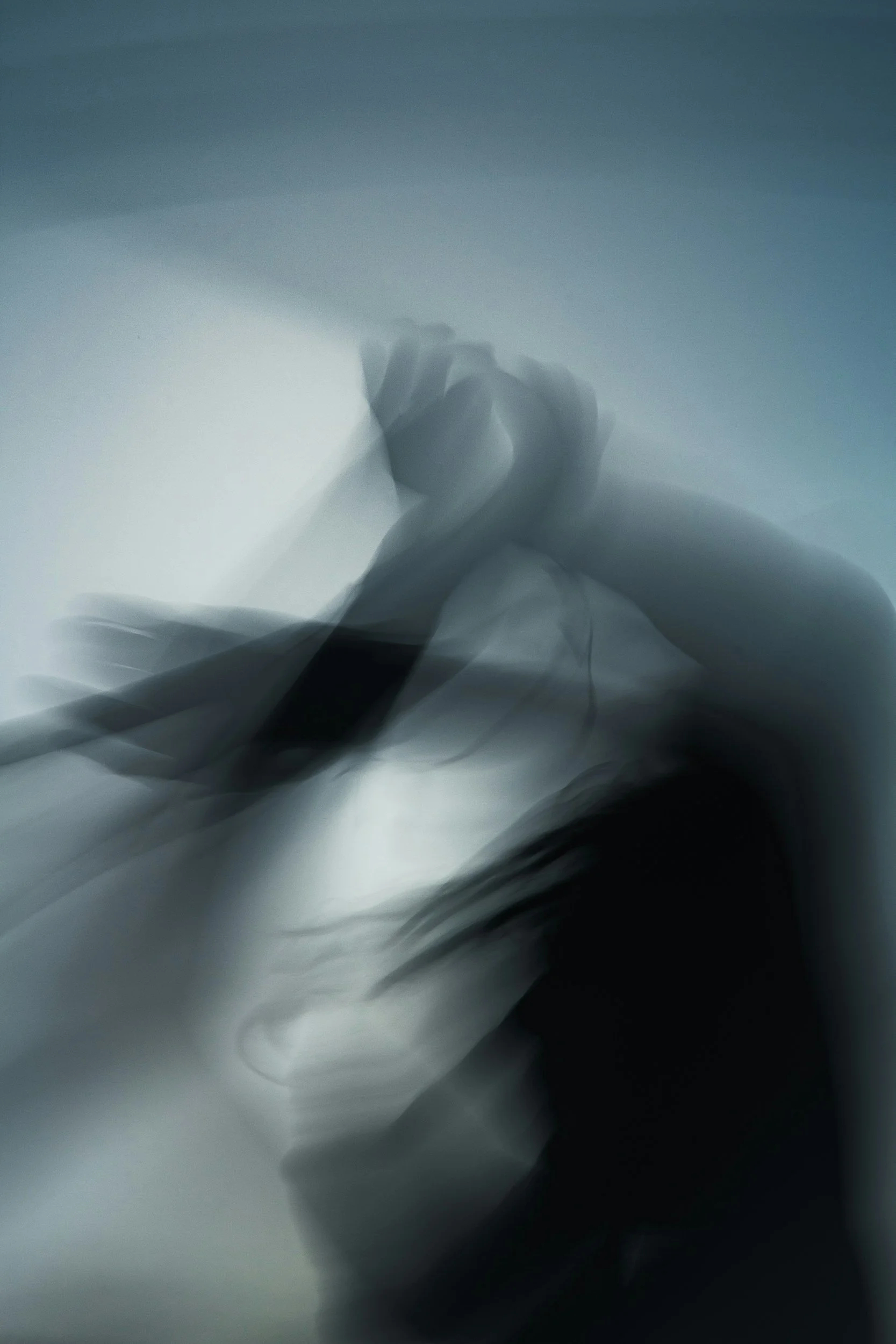
The Body as Beloved:
An experiential practice in presence, authentic movement, and relationship
with Gretchen Cohoon, LCSW
Monday, October 19th
& 12/1
6:30-8:30pm
This is the work that comes after you have talked it all through in therapy. You are that person who knows the right answer to all of your problems. Me too! We may understand our patterns, know where they came from, and have language for our needs, boundaries, desires, and wounds. But knowing is not always the same as living. I am a psychotherapist who works relationally with individuals and couples, as well as an energy worker and intuitive. Across these practices, I have come to believe that the body is essential to any liberation we are seeking.
We cannot think our way entirely into a different way of being. At some point, what we know has to become something we can inhabit.
In order to inhabit a deep relationship to ourselves and with others we need to take risks. We are not meant to live without activation. Life will activate us. The invitation is not to eliminate activation or continually seek states in which nothing unsettles us. A life organized around avoiding activation can keep us stuck—away from risk, intimacy, desire, change, and the very experiences through which we grow. The power of Authentic movement, as an experiential practice, is that we are invited into being witnessed and this process in itself allows for our shame to rise and dissolve in the presence of others. This practice can be inherently activating and with practice it is simultaneously becomes liberating and sweet.
The goal is not to become less alive. It is to become more capable of being alive.
What We Will Do
Through guided somatic meditation, movement, witnessing, and archetypal card pulls, we will create space to listen to the body and discover what happens when we allow ourselves to move without having to perform, produce, explain, or get it right. There is no external influence of being told how to move. You tune in and listen through presence. This is what makes Authentic movement so special. If you feel fear when reading this it might be because your body knows it's special. We will dim the lights and move by candle light. It’s a gorgeous way to live.
We will ask ourselves, how present can we become in this very moment—to our skin, our bones, our breath, and the inner impulse of the body?
What is the quality of that presence?
Can we trust the language and impulse of the body to lead us somewhere new, or bring an old unfinished experience into a new relationship?
There is no prescribed movement and no particular experience we are trying to have. We might pulse or thrash to our own heartbeat.
We might linger in hesitation or uncertainty.
We might approach or move away.
We might play with our yes and our no. We might discover pleasure, stillness, bravery, or shyness. We may even find ourselves in a state we have never known before—ecstatic, deeply quiet, or touching something unnameable and spiritual.
We practice noticing
How does my body wish to move?
Can I wait for an impulse rather than force one?
Where do I contract?
Where do I expand?
What happens when I take up more space?
Can I stay with myself while another person is present?
Can I let myself be seen without abandoning myself?
What happens if I say no or yes?
Witnessing
Half of this practice is moving. The other half is witnessing. Through witnessing, we practice being in relationship with another person in a way that allows them to remain separate, to be in process, and, at times, to arrive. We practice being deeply present without taking responsibility for another person's experience. Without fixing, interpreting, rescuing, and merging. Instead, we offer the quality of our attention. I am here. I see you. I do not need to change your experience in order to be with you. I trust your movement is leading you where you need to go. This is relational presence. Can I care for you without taking you over? Can I remain connected to myself while staying present with you? Can I allow you to be separate from me and care for myself in that experience?
Presence with distinction
The practice is not only about how we move in the room. It is about how we learn to inhabit our lives. For some, this may mean learning to live bigger and to take up space, express desire, risk visibility, and allow more pleasure. For others, it may mean learning to live quieter and learn to slow down, listen more deeply, and discover the power of stillness. It may mean learning to stay when we would normally flee, or learning to leave when we would normally abandon ourselves. We are listening for the impulses to guide.
This practice can travel into our intimate relationships, our work, our creativity, our sexuality and pleasure, our friendships, our conflicts, our celebrations, our communities, and the ways we move through the world.
Truly knowing ourselves requires space to move. The body is not simply something we carry through our lives. The body is where we live them.
The Body as Beloved
Monday, October 19th
& 12/1
6:30-8:30pm
Maha Rose
200 Columbia street
Brooklyn, NY 11231
cancellation policy: account credit or refunds are available if requested 72 hours prior to the event, less a 10% service fee.
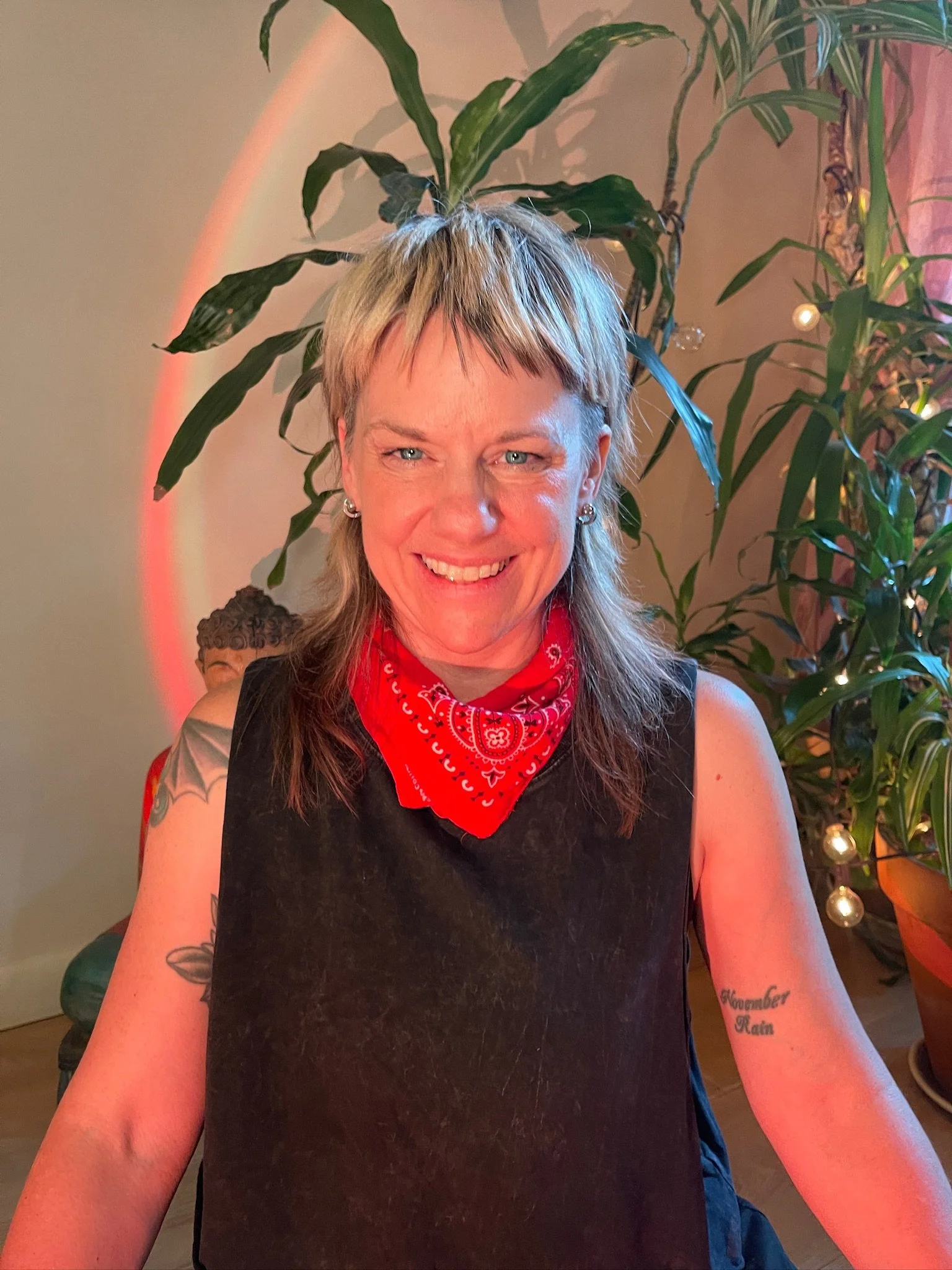
Gretchen Cohoon, LCSW
¨I am a psychotherapist, energy worker, intuitive, and lifelong student of spirituality and embodied practice. I work with individuals and couples, drawing from relational, somatic, movement, mindfulness, and spiritual approaches to healing. I hold a Master’s degree in Women’s Spirituality and have spent much of my life in spiritual communities and practices. My work is deeply influenced by the belief that the body is essential to psychological and spiritual transformation. I have a particular devotion to the Dark Goddess and Divine Mother—to the aspects of the feminine that invite us toward depth, truth, transformation, and the parts of ourselves we may have learned to leave behind. At the center of my work is a belief that love, vulnerability, and a clear voice are pathways to liberation. I am interested in what happens when those pathways are not only understood intellectually, but experienced through the body. The Body as Beloved is an invitation to move beyond knowing into living—to become more intimate with the body, more present with ourselves, and more available for genuine relationship.¨